For many homeowners, cyclone preparation starts with the obvious jobs. Outdoor furniture gets tied down, branches are trimmed back, batteries are checked, and vehicles are moved under cover if possible. The garage door often gets attention too, but usually in a broad way. People think about whether it shuts, whether the remote works, or whether the opening looks secure. What gets missed, again and again, is the condition of the garage door tracks.
That oversight matters. In cyclone-prone areas, garage door failure is not a minor inconvenience. Official Queensland guidance warns that if a garage door fails, wind can enter the home and increase damage to roofs and walls. Once pressure builds inside a house, the consequences can spread well beyond the garage itself. That is why garage doors are treated as a high-priority part of storm hardening, and why track condition deserves a closer look before storm season arrives.
Garage door tracks do not work alone, of course. They are part of a system that includes the door panels, rollers, hardware, garage door springs, and garage door openers. Still, the tracks are where alignment problems become visible and where early warning signs often show up first. A door can have a serviceable motor and a healthy-looking panel, yet still be compromised if the tracks are bent, loose, or poorly aligned. Homeowners preparing for cyclones should understand that distinction.
Why the tracks matter more than most people think
A garage door is only as dependable as the path it travels. Tracks guide the door as it opens and closes, help keep movement controlled, and support the basic geometry of the system. If that path is distorted, the door may not seat properly when shut. In calm weather, that might show up as noise, sticking, or a slightly uneven close. During severe weather, the same weakness can become far more serious.
That is the gap between everyday convenience and cyclone readiness. A garage door that seems “good enough” on a dry Saturday morning may not be adequate when wind pressure rises. Queensland guidance specifically says a garage door should comply with AS/NZS 4505 and be correctly rated for wind pressure, or have a bracing system that can be installed before a cyclone. That point is bigger than a maintenance note. It means households should not confuse garage door resource ordinary operation with true resilience.
Tracks sit right in the middle of that conversation. If they are damaged, the door may not function as intended. If they are solid, correctly fixed, and free from obvious problems, the rest of the system has a better chance of doing its job. That does not mean homeowners should attempt major adjustments on their own, especially where spring tension or structural fixing is involved. It does mean they should learn what deserves attention long before a cyclone warning is issued.
The difference between routine wear and storm-season risk
Most garage doors accumulate wear gradually. Dust builds up, the door gets bumped, fasteners loosen over time, or the movement becomes rough enough that family members start lifting an eyebrow every time it opens. In many homes, those signs linger for months because the door still “works.” That mindset is common, and it is exactly what creates trouble before severe weather.
When you are preparing for cyclones, the standard changes. You are no longer asking whether the door can open and close on a normal day. You are asking whether the entire assembly is in suitable condition for a period when wind, pressure, flying debris, and repeated weather exposure can exploit weak points. A track that is slightly out of line may be tolerable in routine use, but it is not the sort of issue to leave unresolved in storm season.
There is also a practical timing issue. Queensland authorities advise homeowners to prepare before storm season and to go outside only after it is officially safe. That means waiting until a cyclone is approaching is the worst time to discover that the door binds halfway down or that one side does not sit square. By then, trades may be booked out, conditions may be deteriorating, and the work itself may no longer be safe.
What homeowners can realistically look for
A homeowner does not need to become a garage door technician to spot basic warning signs. The useful standard is simpler than that. You are looking for visible condition issues, changes in operation, and anything that suggests the door is not moving or closing in a clean, controlled way.
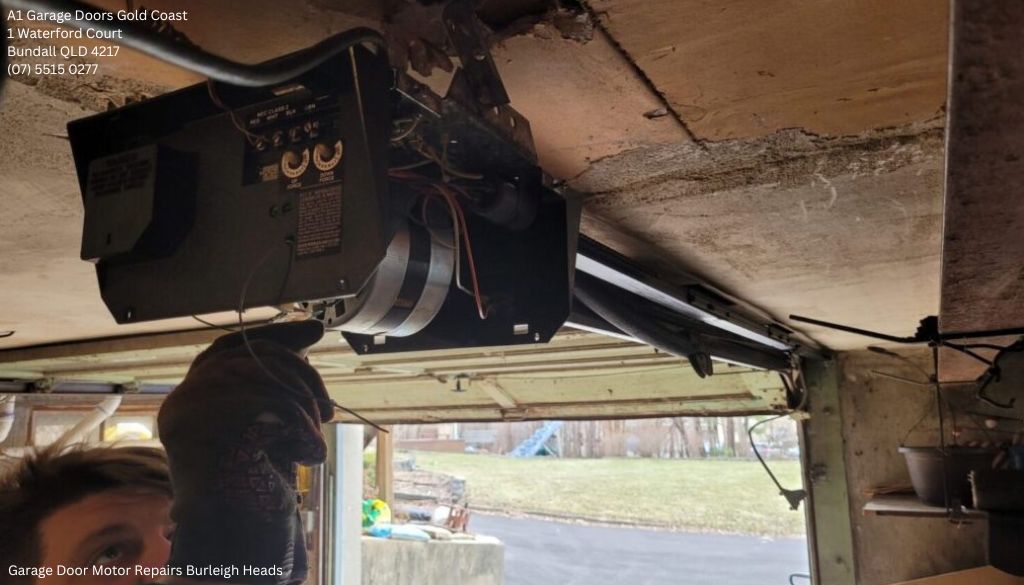
The first clue is often visual. Stand inside the garage with the door closed and look at the tracks on both sides. Do they appear obviously bent, loose, or out of position? Are the fixings secure? Does one side look materially different from the other? You are not trying to measure tolerances. You are checking for the kind of obvious defects that should prompt professional attention.
The second clue is how the door behaves. If it shudders, scrapes, leans, jams, or sounds noticeably rougher than it used to, the tracks may be part of the problem. Noise alone does not tell you exactly what is wrong, because garage door springs, rollers, and openers can all contribute. Still, unusual movement is valuable information, especially if it is getting worse.
The third clue is how the door meets the opening when shut. If it does not appear to close evenly, if light is visible where it should not be, or if the bottom edge does not sit consistently, the system deserves a closer look. In an attached garage, homeowners often notice drafts or dust patterns before they notice mechanical issues. While draught-proofing at the base of doors is often discussed for energy efficiency, it can also alert you to fit problems that should not be ignored.
A pre-season inspection mindset
A good pre-season inspection is calm, methodical, and early. The point is not to carry out technical repairs yourself. The point is to identify condition problems while there is still time to deal with them properly. In practice, that means walking through the garage with fresh eyes rather than treating the door as background infrastructure.
One of the most useful habits is to stop using the door casually for a few minutes and watch a full open and close cycle. Most families interact with garage doors in a hurry, usually from a car seat or while carrying shopping. That is how obvious warning signs get missed. Standing still and observing the motion can tell you more than months of rushed use.
If you rely on garage door openers, this is also the right time to check whether the opener behaves consistently and whether access Southport garage door repair services arrangements make sense if power is interrupted. Queensland storm guidance advises unplugging electrical items before severe weather. For homeowners with powered garage access, that raises practical questions. If the opener is your main point of entry, do not leave that question until the weather turns. The garage must be part of your storm plan, not an afterthought.
A simple pre-cyclone check
Look for visible bends, looseness, or obvious damage in the garage door tracks. Watch the door open and close fully, paying attention to shaking, scraping, or uneven travel. Check whether the door sits properly when closed and whether any gaps or drafts suggest a poor fit. Confirm your garage door openers and access plan are sorted before severe weather, especially if electrical items may need to be unplugged. If the door is not wind-rated or you are unsure, arrange advice early about compliance, bracing, or garage door replacement.That list is deliberately simple because the stakes are high. Overcomplicated maintenance advice often leads to inaction. Homeowners need clear triggers for when to call a qualified contractor.
When maintenance is not enough
There is a point where maintenance stops being the right answer. Queensland housing guidance makes that clear by identifying replacement of existing garage doors and frames with wind-rated versions as part of household resilience work. It also notes that non-compliant garage doors can be a cost-effective replacement target to improve cyclone resilience.
That matters because many households pour time and money into extending the life of a door that was never suitable for the wind conditions it may face. A clean track and a functioning opener do not transform a non-compliant system into a cyclone-ready one. If the existing door is not correctly rated for wind pressure and does not have an appropriate bracing solution, the smarter decision may be garage door replacement rather than another round of patch-up work.
This is where practical judgment comes in. Homeowners naturally prefer repair over replacement. It feels cheaper, faster, and less disruptive. Sometimes it is. But when cyclone resilience is the goal, the better question is whether the current door and frame are worth investing in at all. If the answer is no, fresh tracks on an inadequate door may simply dress up a deeper weakness.
That does not mean every older door must be removed immediately. It means owners should be honest about the difference between restoring convenience and improving resilience. Those are not always the same project.
The role of bracing and professional assessment
Queensland cyclone-preparation guidance allows another pathway besides installing a wind-rated door from the outset. A garage door may also be suitable if it has a bracing system that can be installed before a cyclone. For some households, that can be a practical middle ground, particularly where a full replacement is not immediately feasible.
Still, bracing only works if it is the right system, if it is compatible with the door, and if it can be installed safely and correctly before bad weather arrives. This is not something to improvise in the driveway while a warning is active. If a bracing system is part of your plan, make sure the plan exists in real life, not just in theory. That means confirming what is needed, where the components are stored, and whether anyone in the household actually knows how and when it is meant to be used.
Professional input is especially important here because garage doors are deceptively complex. Tracks, fixings, springs, and framing all interact. A door that looks straightforward from the outside can involve significant force and risk. Garage door springs deserve special respect. They are not a casual DIY element, and cyclone preparation is not the moment to experiment with them.
Common blind spots in attached garages
Attached garages often create a false sense of security because they feel like part of the house rather than part of the exterior envelope. People will obsess over windows and patio doors, then ignore the largest movable opening on the property. That is a mistake.
The garage is also where household clutter tends to collect. Stored items can limit visibility around the tracks, block inspection, or make it difficult to notice slow deterioration. A stack of boxes or garden gear pushed against one side of the opening can hide a problem for months. Before storm season, clear enough space to see the door system properly. It is a simple task, but it changes how much you can actually assess.
Another blind spot involves access and shelter. Queensland guidance advises securing loose outdoor items and parking vehicles under shelter if possible. For many families, that means the garage becomes busy right before a storm. Cars are moved, bins are shifted, and tools are dragged out. If the door tracks are already in poor shape, that last-minute surge in use is exactly when problems emerge. The safest time to find out the garage door sticks is not when you are trying to protect the family car from incoming weather.
How energy efficiency intersects with maintenance
Cyclone readiness and energy efficiency are not the same issue, but they do overlap in useful ways. Australian guidance on home energy performance notes that draught stoppers at the base of doors can help reduce heat loss. In attached garages, that can improve comfort and reduce unwanted air movement into adjoining rooms.
From a maintenance perspective, draughts can also reveal fit problems. If a door never closes neatly because of track alignment or general wear, homeowners may notice dust, airflow, or temperature changes before they connect the issue to the garage door system. That does not mean every draft is a cyclone-risk diagnosis. It does mean the garage door should be looked at as a whole, not just as a moving panel with a remote control.
A well-maintained door is easier to assess for both weather readiness and everyday performance. When the tracks are stable and the door closes properly, it becomes much easier to decide whether you are simply dealing with a sealing issue or with a larger resilience problem.
Knowing when to stop and call a contractor
Some homeowners are diligent to the point of overconfidence. Others avoid looking at the door at all because they assume every problem will be expensive. Both instincts can lead to poor decisions. The sensible middle ground is to inspect what you can safely inspect, document what seems wrong, and bring in a qualified contractor when the issue moves beyond basic observation.
These situations deserve prompt professional attention:
The garage door tracks appear bent, loose, or visibly damaged. The door does not travel evenly or seems to jam, twist, or scrape in operation. You are unsure whether the garage door complies with the relevant wind-pressure requirements or whether a bracing system is available. The door, frame, or hardware appears non-compliant, outdated, or unsuitable for cyclone exposure. Any work may involve structural fixing, tensioned components, or garage door springs.That last point is worth underlining. Safety is not just about the weather. It is also about the repair process itself. Queensland guidance recommends working safely or using a qualified contractor for securing vulnerable parts of the home. Garage doors fit squarely in that category.
A practical standard for readiness
Homeowners do not need perfection to improve their position before cyclone season. They do need honesty, timing, and a willingness to treat the garage door as a critical opening rather than a convenience item. A realistic standard is this: the door should be in good working condition, the tracks should show no obvious damage or instability, access arrangements should be thought through, and the system should be appropriately rated for wind pressure or supported by an approved bracing plan.
If that standard reveals gaps, act early. Pre-season maintenance has real value, especially when it catches loose or damaged garage door tracks before they become part of a bigger failure. But maintenance has limits. Sometimes the wisest move is not another service call, but garage door replacement with a wind-rated system and frame that better supports cyclone resilience.
The households that handle storm season best are rarely the ones scrambling at the last minute. They are usually the ones that worked through the boring details when the sky was still blue. Garage doors fall into that category. Tracks especially do. They are not glamorous, and they are easy to ignore, right up until the day they are not.
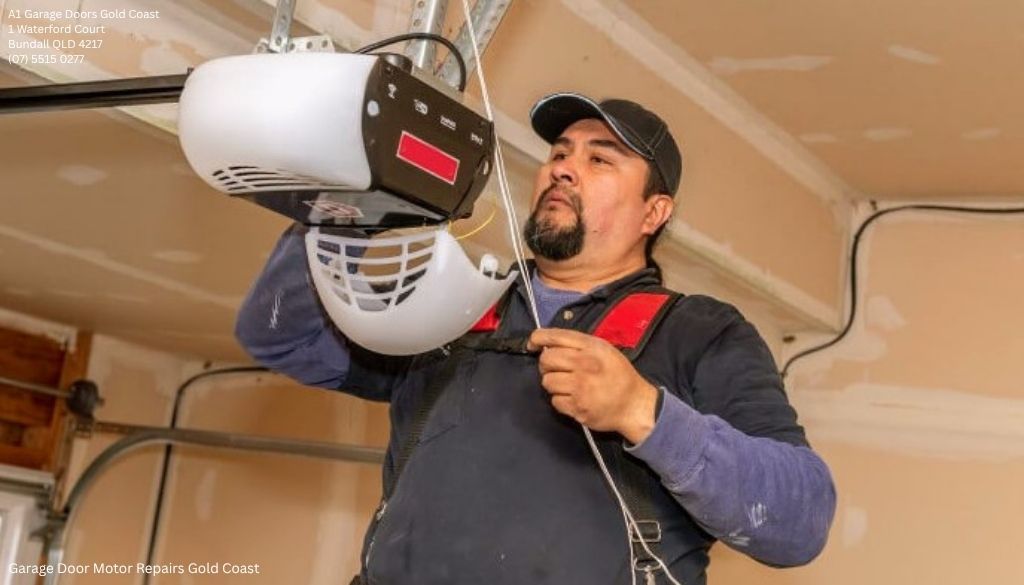
For cyclone preparation, that quiet hardware deserves a serious look.